

AI Data Press — Enterprise strategy, AI adoption, and leadership signals

SECURITY & GOVERNANCE
AI Agents Turn Legacy Data Modernization Into a Trust Preservation Problem

SECURITY & GOVERNANCE
AI Fluency Without AI Literacy Is a Governance Problem Waiting to Happen

SECURITY & GOVERNANCE
Agentic AI Governance Moves From Managing Outputs to Governing Decision-Makers

Make AI Data Press one of your go-to sources on Google
Latest News
As Agents And MCP Servers Multiply, Governance Becomes The Path To Operational Scale
Sensedia SVP Lisa Arthur explains how a neutral governance layer restores the visibility and control enterprises assume they’ve lost.
Leaner AI Workforces Raise The Stakes For Technology Resilience And Data Control
Sachin Ohal, CTO of International Systems Technologies, explains why cutting people out of operations raises both the cost of keeping systems running and the stakes of controlling the data inside them.
Governance and Lineage Help Data Leaders Reconcile Departmental Records for Production AI
Nandakumar Sivaraman, SVP and Chief Architect of Enterprise Data at Bridgenext, explains why AI needs to know who owns each copy of a record and how it changed.

Enterprise AI
View More
Verifying AI Output Starts With Who Authorized The Action Behind It
Ram Srinivasan, Managing Director for AI Adoption, AI Integration, and Future of Work Advisory at JLL, explains who answers for an AI agent's actions, and what a company has to record before anyone can.Why AI Coding Works Better When the Agent Has Nothing Left to Decide
Joseph Feld, Senior Full-Stack Engineer in AI Systems Architecture at Ford Motor Company, says the specification carries every architectural decision, leaving the coding agent nothing to infer on its own.
AI-Native Development Forces Teams To Define What Software May Change
Stephen McGowan, Founder of TrolleyRelay, explains why unfinished work limits teams building with AI agents, and what he gates before an agent writes anything.
How Clinical AI Earns Trust Through Narrow Use Cases and Expert Validation Starting at the DB Level
Ahmed Mohamed, a Database Administrator at Al Moammar Information Systems Co., shares tips for building medical AI, covering model selection, clinical validation, local data, and deployment constraints.
How Knowledge Graphs and a Shared Source of Truth Help Enterprise AI Agents Move Past Benchmaxxing
Sairam Krishnan, Senior AI/ML Engineering Leader at Apple, lays out an agent memory design that keeps enterprise work reliable when models are tuned to top benchmarks.Leadership
View More
CIOs Reverse Conway's Law To Build Agent Architecture Around Business Outcomes First
Christoph Wargitsch, Founder and CEO of WARGITSCH Transformation Engineers, explains why a company's structure decides what its agents become and when that decision has to be made.
How Enterprise AI Teams Are Finding Their Strongest Use Cases In Previously Abandoned Projects
Luke Hobson, Assistant Director of Instructional Design at MIT xPRO, finds the strongest AI use cases in projects his organization already abandoned over cost and headcount.
Healthcare AI Pays Off in Workflows and Pathways, Not in Trying to Replace Clinical Judgment
John Paul Backhouse, Global Head of Data & Advanced Analytics at Sutherland, explains why agentic AI embedded in scheduling, revenue cycle, and documentation is where the real value lives.
IT Sprawl Starts at the Bottom, But Top-Down Governance Defines The Source Of Truth
José Freitas, Lead Enterprise Architect at the IATA, discusses the friction between top-down governance and bottom-up IT sprawl and how leaders can focus on asset truth to cut through the noise.
An AI Architect's Guide to Capturing AI Returns Through Culture-First Adoption Strategies
AI initiatives succeed when companies get the human side right. Annie Hardy, a Global AI Architect at Cisco, explains how leaders can turn AI’s potential into real impact by focusing on a bottom-up strategy that emphasizes people, measurement, and internal communities.
AI Gains Traction When Companies Reduce Friction, Turn Managers Into Workflow Owners
Patrick Schaber, AI transformation leader and Fractional CMO, gives us a closer look at the middle managers serving as the linchpin of AI adoption and how to support them.
How Human Gatekeepers Strengthen Legal Defensibility In Regulated AI Deployments
At Ciph Lab, Founder and CEO Juanita Álvarez reframes human in the loop as a structural design choice that makes AI decisions accountable, transparent, and defensible.Industry News
View More
Manufacturing's AI Problem Is Too Many Doors, Not Too Few Solutions
Paul S. Lavoie, Vice President of Innovation and Applied Technology at the University of New Haven, argues that manufacturing's AI adoption struggle is a navigation problem and proposes an AI-enabled single front door that diagnoses business problems before matching vendors to them.
India Offers 21-Year Tax Holiday to Become a Global AI Hub
India introduces a 21-year tax holiday for foreign cloud providers on export-oriented AI services to establish itself as a global computing hub.
Asset Allocators Warn AI Risk Lies In Hidden Exposure Already Embedded Across Portfolios
Paul O’Brien, a Member of the Investment Committee at the Wyoming Retirement System, says AI’s real risk for asset allocators isn’t hype but unseen exposure already embedded across portfolios and governance models.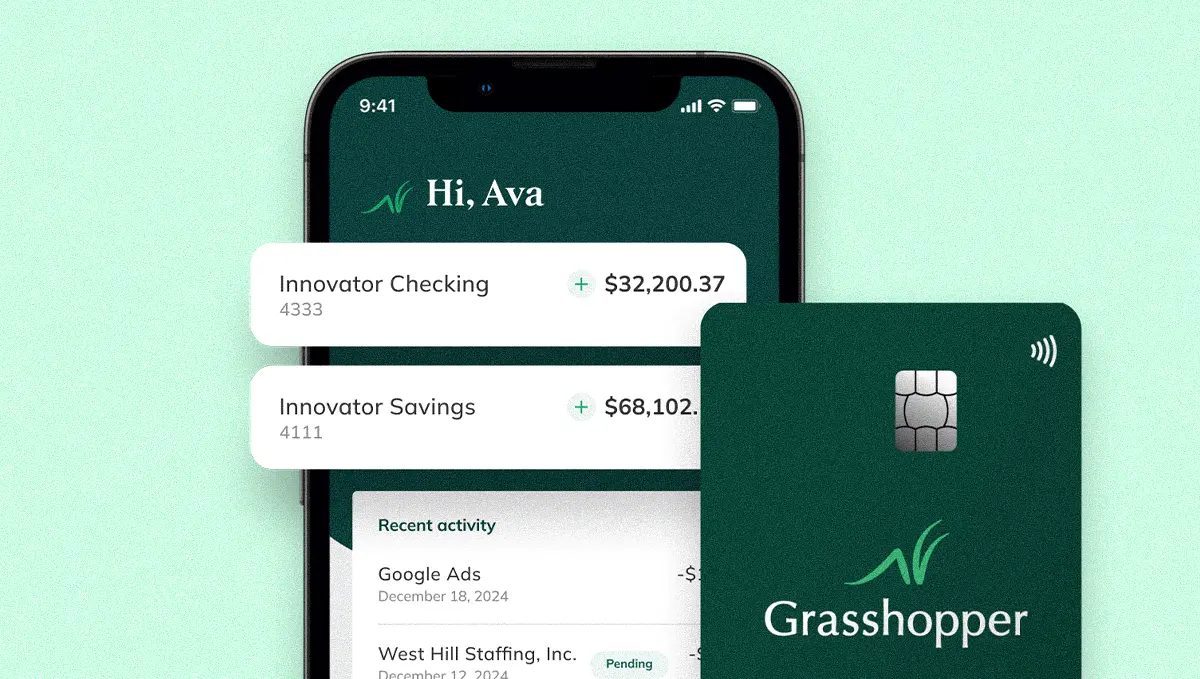
How Grasshopper Bank Became an Early MCP Leader Using AI For Real-Time Financial Analysis
Nate Gruendemann, Product Manager at Grasshopper Bank, outlines how the new MCP based AI connector delivers secure real time financial analysis for business clients, with EnFi’s Chris Aronis and Michelle Breitman Hipwood demonstrating how it works inside a regulated enterprise workflow.
AWS Open-Sources Agent SOPs to Tame Unruly AI Agents
AWS releases Agent SOPs, an open-source framework using natural language instructions to make unreliable AI agents easier to control and deploy.


Data & Infrastructure
View More
Point AI at Your Data And It Guesses. The Fix Is a Layer Most Teams Skip.
AI leader Kamal Singh says frontier models are nearly interchangeable. Enterprise AI reliability comes from the context, ontology and access control that surround them.Graph Queries In Postgres 19 Reach Production Only When Every Extension Version Aligns
Vladislav Galibov, Co-Founder of Croco.Team, explains why the extensions under a Postgres AI stack decide when a new release becomes usable in production.
Governance and Lineage Help Data Leaders Reconcile Departmental Records for Production AI
Nandakumar Sivaraman, SVP and Chief Architect of Enterprise Data at Bridgenext, explains why AI needs to know who owns each copy of a record and how it changed.Postgres Teams Turn the Write Ahead Log Into a Real Time Event Bus
Diaa Radwan, Data and AI Solution Engineer on Microsoft's Global Black Belt team, explains how WAL, logical replication, and change data capture let PostgreSQL generate real-time events for downstream systems while staying the authoritative system of record.

AI is Telling Engineers to Build the Database First and the Rest Can Follow
Grant Fritchey, Product Advocate at Redgate Software, explains why AI-assisted development is pushing enterprises back toward data-first architecture, where database design, governance, and senior engineering judgment decide whether faster code holds up.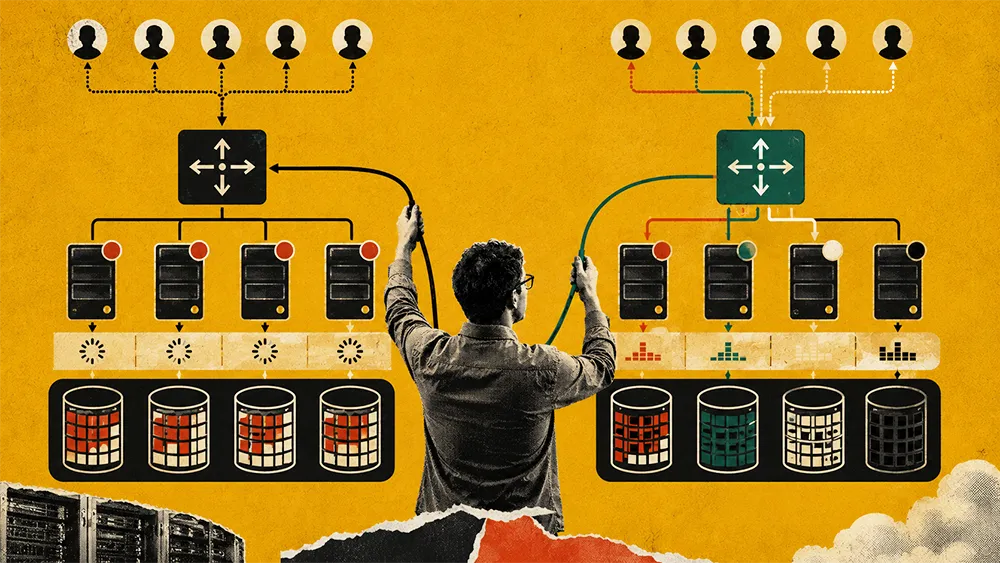
KV Cache Optimization Turns Inference Into a Storage Systems Problem
Intel engineer Vamshi Nagireddy explains why KV cache optimization is a systems problem best solved with the block allocators, eviction policies, and data-locality discipline of databases.Enterprise AI Stalls on Data Quality While Boards Keep Asking About the Model
Aaron Pries, Director of Data Analytics at Bluenet, explains why enterprise AI value depends on backend data quality, API connectivity, and system integration rather than client-facing features.Security & Governance
View MoreAI Agents Turn Legacy Data Modernization Into a Trust Preservation Problem
Anudeep Reddy Puthalapattu, Senior AI Data Engineer at HCL America, explains why financial institutions need governance, lineage, and business context embedded in the data platform as AI becomes a new consumer of enterprise data.AI Fluency Without AI Literacy Is a Governance Problem Waiting to Happen
Mario Martins argues that enterprise AI adoption is moving faster than the access controls, data practices, and governance models needed to manage it safely.Agentic AI Governance Moves From Managing Outputs to Governing Decision-Makers
Gopichand Mannava, Chief Data Architect for the State of Connecticut, details the moment governance must move beyond model outputs to delegated authority, deterministic controls, and accountable ownership.
The Case For Open Source Grows As Regulated Industries Extend AI Governance Into Workflows
Vladimir Filkov, Professor of Computer Science at UC Davis, explains why AI governance depends on an organization's ability to edit the software its records pass through.
Every Line of AI Generated Code Is a Liability and Most Teams Are Not Checking Fast Enough
Matt Erman, Senior Software Engineer at Blackboard and author of "Grokking Software Architecture," explains why AI-generated code creates liability faster than teams can review it.
Is AI Governance Drifting Into 'Compliance Theater' As Automated Reports Replace Human Judgment?
Sandra Luksic, Associate in AI Governance at Booz Allen Hamilton, argues that automated compliance reporting is severing risk management from the people it is meant to protect, creating a dangerous illusion of safety.
Detection Engineers Move To Agentic Workflows As AI Attackers Cut Recon To Minutes
Danny Z., a senior security engineer, explains why narrow, single-purpose AI agents outperform general-purpose ones in detection and response, and why organizations need agentic workflows of their own to keep pace with AI-assisted attackers.Most Popular
SECURITY & GOVERNANCE
As Agents And MCP Servers Multiply, Governance Becomes The Path To Operational Scale
ENTERPRISE AI
Leaner AI Workforces Raise The Stakes For Technology Resilience And Data Control
DATA & INFRASTRUCTURE
Governance and Lineage Help Data Leaders Reconcile Departmental Records for Production AI
ENTERPRISE AI
How Knowledge Graphs and a Shared Source of Truth Help Enterprise AI Agents Move Past Benchmaxxing
ENTERPRISE AI
Verifying AI Output Starts With Who Authorized The Action Behind It
DATA & INFRASTRUCTURE
Point AI at Your Data And It Guesses. The Fix Is a Layer Most Teams Skip.
ENTERPRISE AI