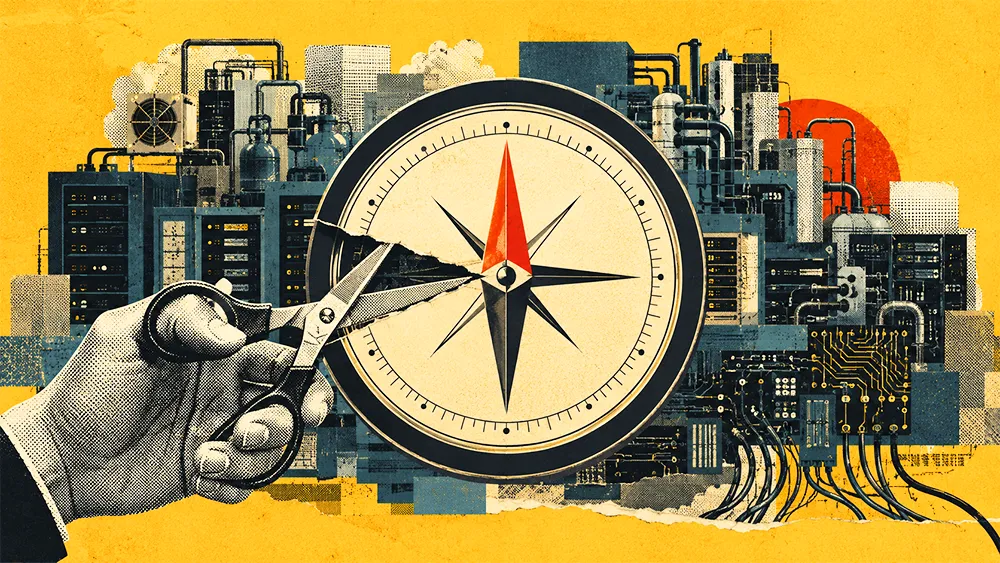
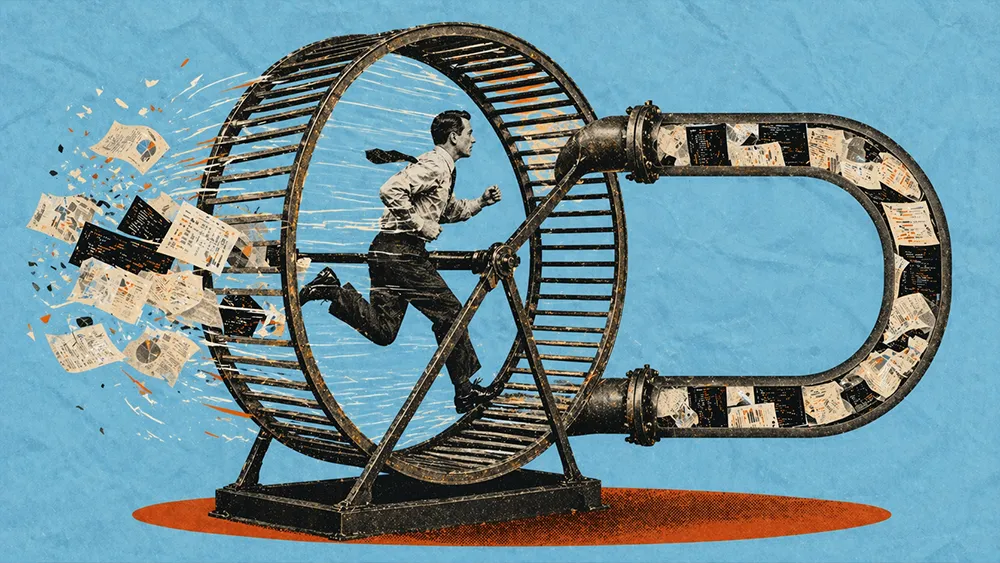
Healthcare’s challenge today is not the absence of innovation but the illusion of it. Many systems roll out strategies that look impressive on paper yet fail to improve workflows, outcomes, or trust among frontline staff. Designed in boardrooms, these top-down initiatives overlook the daily reality of a workforce already strained by shortages and burnout, adding friction to an industry already drowning in digital noise.
We spoke with Dr. Sarah Matt, a Clinical Assistant Professor at SUNY Upstate Medical University, Physician at The Mary Rose Clinic, and former Chief Strategy Officer at robotic surgery company Sovato. An ex-Oracle VP and the author of the upcoming book The Borderless Healthcare Revolution, Matt has spent her career at the intersection of clinical practice and corporate strategy. She argued that the key to unlocking AI’s true potential lies not in the technology itself, but in the intentionality and leadership behind it.
The hammer and the nail: "A lot of builders and delivery systems see a shiny tool like AI and try to shove it into every problem," Matt warned. "If you're a hammer looking for a nail, you're going to be disappointed. But if you have real, urgent problems to solve, AI may be the answer—or it may not. You need to ask what the use case is, what the problem is, and what the options are for solving it."
The trust deficit: For Matt, the "illusion of AI" is fundamentally a leadership failure. When strategy is divorced from the daily reality of patient care, even the most sophisticated tools are destined to fail. The antidote is to close the gap between the C-suite and the clinic. "A lot of strategies are made on paper by executives who haven’t talked to the people on the ground," she explained. "Providers may not trust the system, and that trust is vital."
That trust cannot be mandated; it must be earned. Matt pointed to a successful AI rollout at AtlantiCare with Oracle’s digital assistant as a model for how to succeed. The key was to reject a big-bang, top-down implementation in favor of a more organic, community-driven approach.
Start with champions: "They started small, choosing one specialty and an eager group of physicians as champions," she noted. "Those champions are vital for building trust and vetting the innovation." By starting with a specific use case and a coalition of the willing, the organization secured early wins and built momentum.
Building ownership: The crucial next step was how they scaled. It wasn't just a memo; it was a cultural event designed to create a sense of shared purpose. "It was about bringing in the entire community so everyone felt included," Matt said. "That sense of ownership is critical. AI requires both ownership and trust, and if the people using it every day don’t have those, success is unlikely."
Trust building requires rigorous internal governance that goes beyond federal regulations. Leaders must be intentional about what problems they are trying to solve and must look under the hood of the tools they deploy, because the risks of failing to do so are immense, from perpetuating bias to dangerous AI hallucinations.
Intentional governance: "Just because something is legal or allowed doesn’t mean you should do it," she stated. "Many hospitals are already using biased algorithms and rules engines without realizing it. It comes down to intentionality—understand what the tool does, know its limitations, and look under the hood so you can use it effectively."
Measuring what matters: Matt argued that success requires rethinking how progress is measured. "Often we look to static KPIs. But instead, we should be looking for actions," she said. "Rather than counting patients through the system or beds emptied, think about speed to diagnosis or how long it took a patient to get to radiology. If trust and positive feelings among staff are high, you may keep efficiency the same but reduce burnout. That’s a different way to measure that actually addresses the real problems."
Despite the challenges, Matt is optimistic about the future. When implemented with purpose and a deep understanding of human needs, AI has the power to solve some of healthcare's most intractable problems. This vision is already taking shape, with initiatives like the NHS AI physiotherapy trial showing what’s possible when technology is applied correctly. For Matt, this is the ultimate prize.
"We have the potential to help more people, improve access, and close research gaps so we can care for all kinds of populations in a meaningful way," she reflected. "Those are the things that excite me."